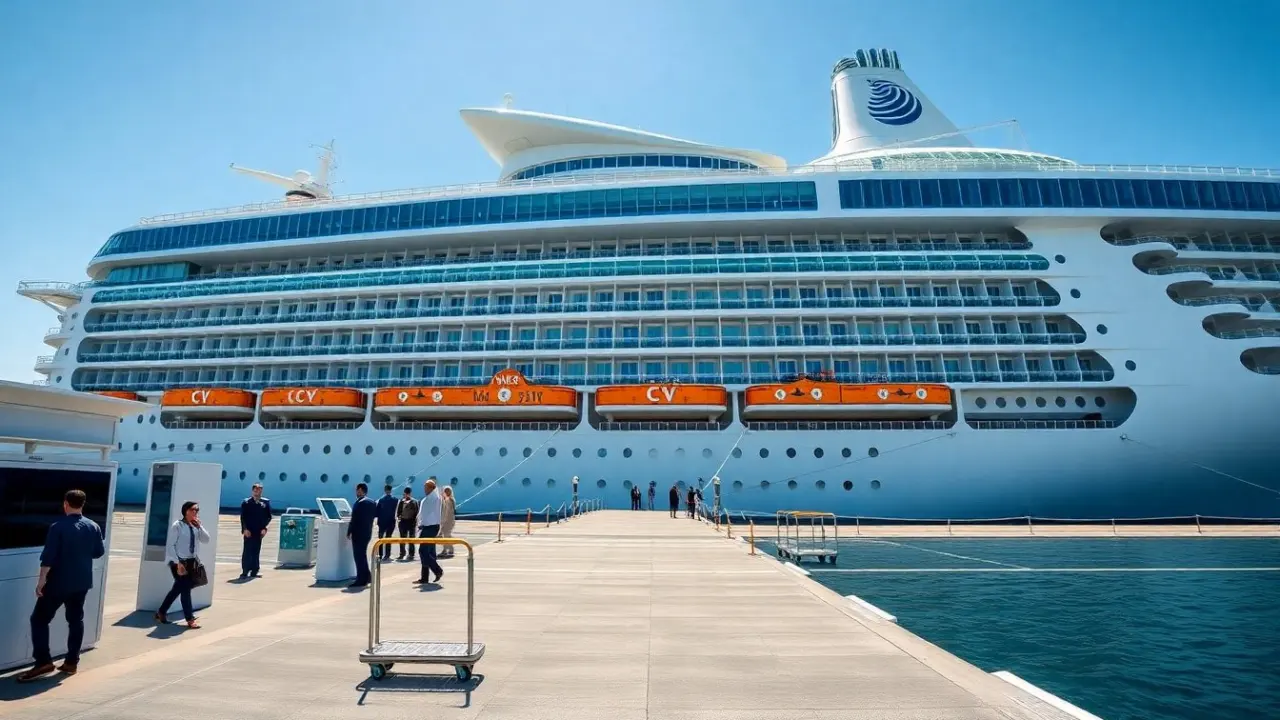
The biggest cruise ship in the world 2025 is Icon of the Seas. The ship serves thousands of guests per sailing and was designed to scale hospitality, entertainment, and transit systems for very large guest counts. It offers record size, varied amenities, and new onboard systems intended to preserve comfort even at high occupancy. Travelers seek scale, comfort, and variety; some are drawn by headline numbers, others by the expanded choice of venues and activities that a ship this size can provide. This article explains size figures, engineering choices, standout attractions, and practical advice so readers can decide whether Icon of the Seas fits their travel plans and travel style.
Key Takeaways
- Icon of the Seas is the biggest cruise ship in the world 2025, boasting over 250,000 gross tonnage and capacity for more than 7,600 passengers.
- The ship features innovative engineering with modular construction, advanced materials, and emission-reducing technologies; these choices support stability, safety, and operational efficiency at scale.
- Onboard attractions include multiple water parks, thrill rides, theaters, and themed neighborhoods that allow different groups—families, couples, solo travelers—to find their preferred experience without everyone competing for the same spaces.
- Dining options range from casual buffets to specialty restaurants and suite upgrades, with flexible packages and a la carte choices to match many budgets and dining preferences.
- Accessibility and smart technology enhance guest comfort: accessible stateroom layouts, app-controlled cabin settings, and ship-wide navigation tools are balanced with energy-efficient systems to reduce environmental impact.
- Travelers should book early, budget for optional extras, plan shore excursions in advance, and use the ship’s app and pre-cruise tools to manage time onboard and avoid bottlenecks.
How Icon Of The Seas Compares: Tonnage, Dimensions, And Passenger Capacity
Icon of the Seas claims the title of the biggest cruise ship in the world 2025 by gross tonnage and passenger capacity. Public figures cite a gross tonnage above 250,000 GT, which places it ahead of previous record holders. Physically, the ship’s length and beam place it among the longest and widest passenger vessels, creating more deck area and interior volume per guest than many older ships. With capacity figures cited for both double-occupancy and maximum occupancy including crew, the ship intentionally offers a wide range of cabin types—from compact interior rooms to expanded family suites—so passenger density can be managed through layout and public-space allocation. Comparing ships by tonnage, public-space ratio, and cabin mix is more useful than raw length alone: a higher public-space-per-guest number typically means less perceived crowding even when absolute passenger counts are high. Industry observers also look at embarkation logistics, lifeboat capacity, and circulation paths on board to assess how comfortably a ship of this scale will operate in practice.
Record-Breaking Engineering: Design Choices That Made It The Largest
Naval architects reached record size by combining wider hull sections, increased beam, and a deck layout optimized for guest flow. Modular construction techniques let shipyards build large blocks simultaneously and join them with high-precision alignment, shortening build time and enabling complex internal arrangements. Structural engineers balanced heavier steel sections with targeted use of lighter materials in non-loadbearing areas to control overall weight while preserving strength and crashworthiness. Placing heavy machinery lower in the hull lowers the center of gravity and improves roll stability; designers also added stabilization systems tuned for the ship’s unique dimensions. Emissions control and regulatory compliance drove the adoption of advanced exhaust-scrubbing systems and fuel-management technologies; these systems are integrated into overall design rather than retrofits, improving efficiency. Propulsion combines efficient prime movers with electric drive and optimized propeller and rudder geometry to move a very large hull with reliable fuel use. Safety, evacuation, and damage-control systems adhere to SOLAS and other international standards and are supplemented by automated inspection, condition-monitoring tools, and redundant critical systems so operations remain safe even at high throughput.
Top Attractions And Innovations Onboard
Icon of the Seas spreads attractions across neighborhoods and decks to reduce bottlenecks and create distinct atmospheres. Themed neighborhoods concentrate dining, bars, and entertainment in walkable clusters so guests can choose a vibe—family-friendly, adults-only, relaxation-focused—without travelling the full length of the ship. Water parks and large outdoor venues are layered with quieter plazas, observation points, and shaded retreat areas so the ship simultaneously supports high-energy activity and restful spaces. Digital wayfinding and a ship-wide app help guests locate venues, reserve time slots, and receive real-time updates about capacity to avoid queues. Cashless payments, wearable access devices, and contactless entry to experiences speed throughput at high-traffic venues. The ship’s design also emphasizes flexible spaces that can convert from daytime activities to evening entertainment, which expands programming options and makes better use of public volume throughout the day.
Family And Entertainment Highlights: Water Parks, Theaters, And Thrill Rides
The ship offers multiple water parks with a range of slides, splash zones, and splash pads laid out to separate small-child areas from high-thrill slides. Family pools and action areas include features like surf simulators and activity courses that can be reserved in short time blocks to spread use. The main theater is sized for large productions and is supplemented by smaller venues—studio theaters, outdoor stages, and cabaret rooms—that run concurrent programming for different age groups and tastes. Thrill rides such as zip lines or coaster-style attractions are routed and managed to minimize interaction with pedestrian paths; ride reservation systems and timed boarding reduce lines. Youth programming includes supervised clubs and age-specific activities with staff-to-child ratios designed for safety and engagement; these programs often include evening open-house options so parents can use adult-focused venues while children are in trusted care. The overall entertainment plan aims to give families choices so multiple generations on one booking can each have satisfying experiences.
Dining, Bars, And Cabin Options: From Suite Upgrades To Specialty Restaurants
Dining is arranged to handle large guest counts through a mix of included venues and a la carte specialty options. Buffet and casual stations use multiple service lines and staggered seating to reduce congestion, while specialty restaurants and signature concepts are reservation-based to control flow and guest experience. Bars and lounges vary from informal poolside counters to curated cocktail venues where mixology and atmosphere are part of the draw; many offer timed experiences and limited-capacity reservations for popular evenings. Cabin inventory spans standard interiors to multi-room family suites and premium suites with private amenities; suite guests typically receive priority access to certain venues and services, which helps distribute demand. Pre-cruise online tools let guests select dining packages, shore excursions, and onboard credits to pre-pay for extras; this planning reduces onboard transaction friction and can help travelers manage their overall budget.
Onboard Experience: Accessibility, Sustainability, And Smart Technology
Accessibility is embedded across the ship with dedicated staterooms designed for mobility devices, roll-in showers, widened doorways in key cabins, and carefully graded ramps and elevators to connect major areas. Crew receive training in disability awareness and in operating assistance equipment so guests with mobility, hearing, or visual needs can move around with confidence; advance requests for equipment and services are recommended to ensure availability. Sustainability measures include energy recovery systems, optimized HVAC, shore-power interfaces to cut emissions while docked, and advanced wastewater and solid-waste systems designed to meet or exceed maritime regulations. Smart-ship technologies enable guest controls for in-cabin lighting, shades, and temperature through the ship app and in-room interfaces; the same network supports predictive maintenance for mechanical systems, which reduces unexpected disruptions. Onboard networks are designed for high capacity so streaming, contactless payments, and app services remain responsive even at peak occupancy; guests should expect tiered connectivity options, with premium packages for heavy users and complimentary basic access for messaging and scheduling.
Practical Tips For Travelers: Booking, Costs, And What To Expect On Board
Because Icon of the Seas sails large numbers of guests, book early to secure preferred cabin types, dining times, and shore excursions. If you need a particular cabin location (near elevators, away from noise, or connected family suites), reserve as soon as possible—popular configurations sell out first. Consider package options that bundle dining and drink plans if you expect to use specialty venues often; for infrequent specialty-dining users, a la carte spending can be more economical. Expect longer embarkation and debarkation times than on smaller ships—arrive at the terminal during your assigned window, have documents ready, and use electronic check-in where available to speed the process. For onboard logistics, download and familiarize yourself with the official app before boarding: it shows daily schedules, reservation management, deck plans, and real-time venue capacity. Pack comfortable, activity-appropriate footwear, layered clothing for indoor/outdoor transitions, and any medications or assistive devices you rely on; bring a small daypack for excursions and a power bank for devices. Budget for optional extras—gratuities, shore tours, spa treatments, specialty dining, and any third-party activities—and check cancellation and change policies for shore excursions. Finally, plan time to explore beyond headline attractions: quieter decks, observation areas, and scheduled off-peak events often deliver memorable moments without the crowds.