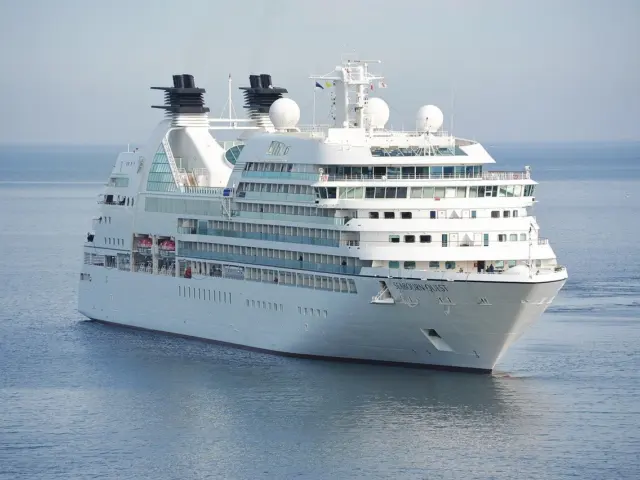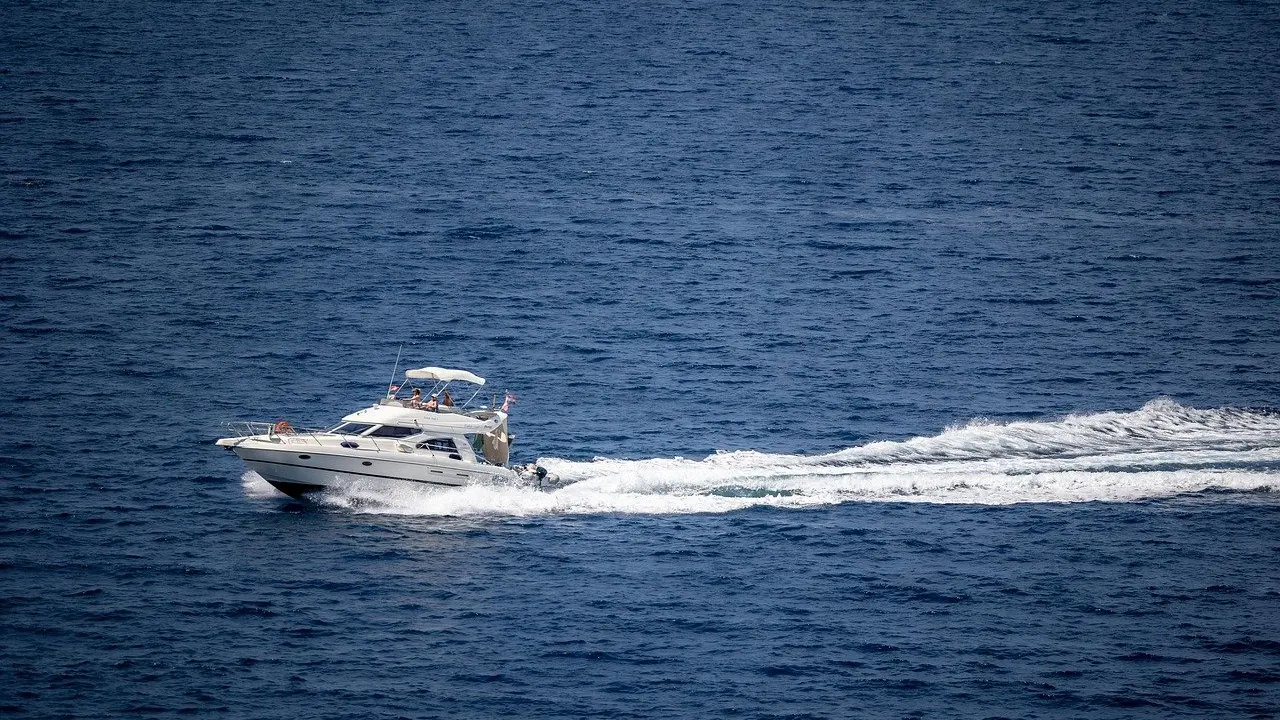
The average speed of a cruise ship is roughly 21 to 24 knots (38.9 to 44.4 km/h) for larger passenger ships, according to one cruise-speed overview. Most ships stay well below their top speed, so check each ship’s own service speed.
Speed is one input among many when you compare sailings. For the wider decisions, see our walkthrough of how to book a cruise, then use the sections below to judge what a ship’s listed speed actually tells you.
Why ships cruise below top speed
Larger passenger cruise ships travel at around 21 to 24 knots, and most ships stick to a much lower cruising speed than the maximum they could reach. Slower cruising also lets a ship make its fuel last longer. The reasons come down to physics and hull design.
The cost of extra speed
Energy use climbs far faster than speed. One maritime explainer notes that the rate of energy consumption increases as the cube of the speed. A forum explanation of form drag makes the same point in practical terms: power requirement scales with the cube of speed. Beyond a ship’s optimum speed, drag builds up rapidly and going faster becomes very energy-expensive.
The practical meaning is that the last few knots are the most costly ones. When a ship cruises below its maximum, that is usually a fuel-range and efficiency decision rather than a sign that it cannot go faster.
Hull design and length
Any traditionally hulled ship has an optimum speed, called its hull speed, which is related to its length. For displacement boats, the rule of thumb is 1.34 × the square root of the waterline length in feet, giving a speed in knots. A 33 ft waterline works out to 7.7 knots. That example is a small boat, and cruise ships are far longer, so treat it as an illustration of the principle: length sets the speed at which a hull stops being efficient.
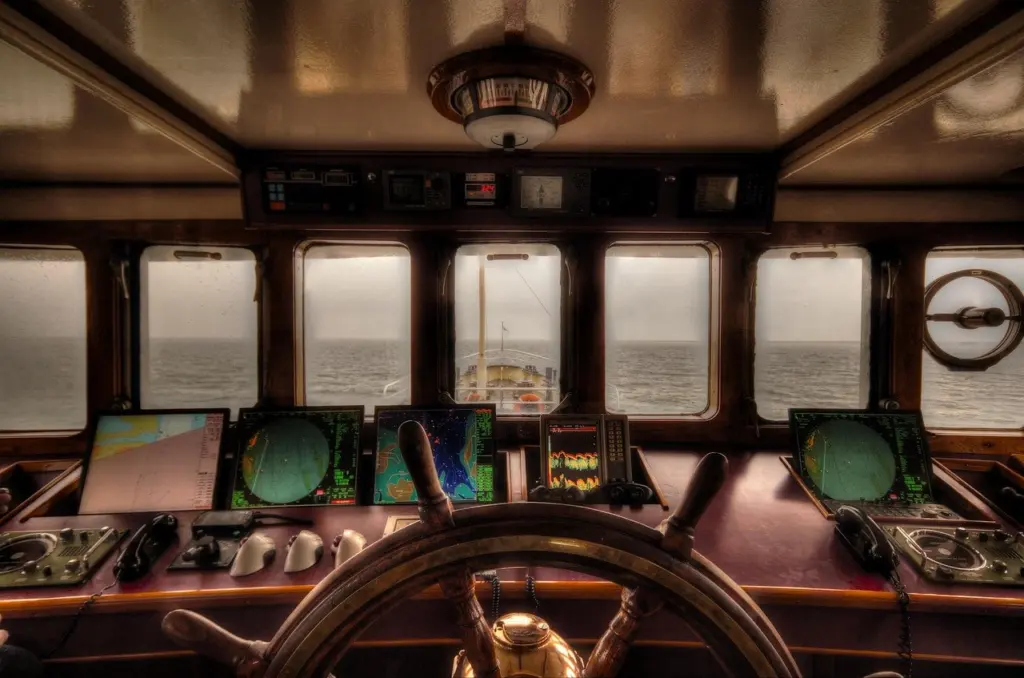
Modern cruise hulls are not chasing records. Design effort today is focused on a smooth, stable ride, using bulbous bows and active stabilizers. Size matters too: the overview linked above observes that the bigger the cruise ship, the slower the average speed. If you want a sense of how large the biggest ships are, Inside Icon Of The Seas: The Biggest Cruise Ship In The World 2025 — Size, Features, And What To Expect – Electracruises covers one of them in detail.
For historical context, the Titanic’s top speed was 23 knots. That is close to the typical range of today’s larger passenger ships, which suggests that everyday cruise speeds have not moved far from that level.
How a ship’s pace is chosen
No single number sets a cruise ship’s speed. The pace on any day is a compromise, and it helps to read it in this order:
- Start with the hull. Length, size and design set the range in which the ship runs efficiently.
- Weigh fuel. Staying below maximum speed stretches fuel range, so most of the voyage is flown well under the ceiling.
- Fit the itinerary. The route and arrival times decide how much of that range the ship needs to use.
- Adjust for conditions. Weather can override the plan in either direction.
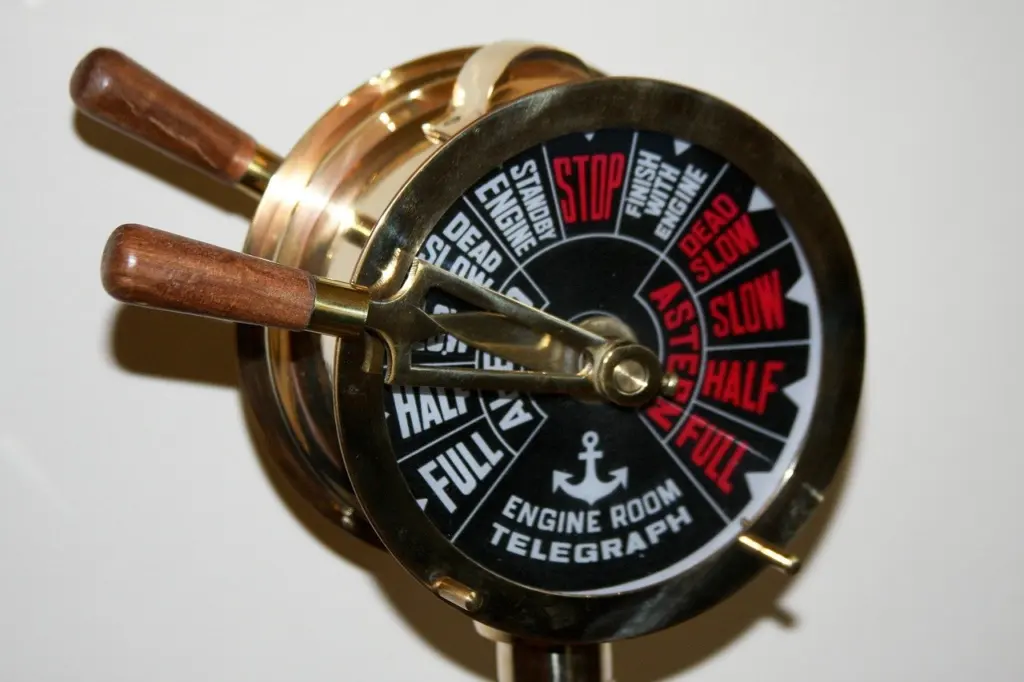
Speed itself is ordered in steps from the bridge to the engine room, and older engine order telegraphs show this clearly.
Speeds of real ships
The examples below mix cruising speeds, service speeds and one reported maximum, so compare like with like. The table is a planning aid, not a ranking of which ship is fastest.
| Ship or class | Listed speed | Planning use |
|---|---|---|
| Larger passenger cruise ships | Typically 21 to 24 knots (38.9 to 44.4 km/h) | A sensible default expectation for a larger ship. |
| Queen Mary 2 | Cruises at around 26 knots (48 km/h); reported maximum just over 30 knots (56 km/h) | Use the cruising figure for planning, since the maximum is a ceiling. |
| Queen Elizabeth 2 | Service speed of 23.7 knots (43.8 km/h), with seven of nine engines used | Shows a ship holding a service speed without using every engine. |
| Explorer of the Seas | 23.7 knots (43.9 km/h) | Falls inside the typical larger-ship range. |
| Legend of the Seas | 27 knots (50 km/h) | Above the typical range, so confirm whether it is a service or maximum figure. |
| Ocean Princess | 18 knots (33 km/h) | Below the typical larger-ship range, an example of a slower design. |
These figures come from a cruise-speed overview; labels such as cruising, service and reported maximum differ by ship.
The Queen Mary 2 shows why the label matters. A reported maximum of just over 30 knots (56 km/h) sounds like a different ship from one cruising at around 26 knots (48 km/h). Another forum comment puts the Queen Mary 2’s top speed at about 30 knots, which agrees with the reported ceiling. The cruising figure describes how the ship usually runs.
Weather and itinerary in practice
Storms can work against the usual logic of saving fuel. In some conditions, a ship will speed up to move around rough waters quickly. A ship’s slower, efficient cruising pace is therefore a baseline that the crew can change, rather than a fixed limit.
The itinerary sets the other half of the picture. The same overview notes that passengers aboard the Queen Mary 2 can travel from Southampton to New York in just seven days. A ship that cruises at a higher speed suits a long crossing like that, where the route is the point of the trip.
Most cruises are built differently. One forum summary says the aim today is to give people a lot of time to dine and buy drinks, so a typical sailing is designed around time aboard and ports rather than the fastest passage. Shorter sailings, such as the one in Set Sail Fast: The Ultimate Guide To Planning A Perfect 3-Day Cruise From Galveston (2026) – Electracruises, are a good place to apply the same reading: look at the itinerary first, then at the ship’s listed speed.
Using speed figures when you choose a cruise
Speed is a poor reason to pick one ship over another unless your route really depends on it. These checks help you read the numbers sensibly:
- Look for the label. A cruising speed, a service speed and a maximum speed describe different things, as the Queen Mary 2 and Queen Elizabeth 2 entries above show.
- Expect a lower pace than the ceiling. A ship’s maximum is not a target. Because energy use climbs with the cube of speed, ships run below it.
- Judge by the route. A long crossing benefits from a ship that cruises faster. A port-focused itinerary does not need it.
- Allow for change. Weather can lead a ship to speed up, so a printed pace is a plan, not a promise.
Frequently asked questions
How many kilometres per hour is one knot?
One knot is one nautical mile per hour, which equals 1.852 km/h.
Are modern cruise ships designed to be fast?
Generally no. The emphasis is on time aboard, so ships are built for a smooth, stable ride rather than record speeds.
Is hull speed a hard physical limit?
No. Hull speed is a practical, energy-based limit rather than an absolute one. A hull can be driven faster, but at a steep cost in energy.
How much faster does extra engine power make a ship?
Not much. One forum comment suggests that doubling the engine power of a ship going 25 knots gets it to maybe 30 knots.