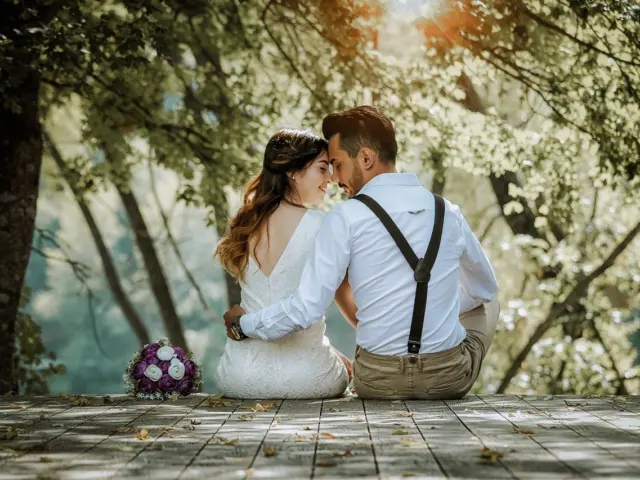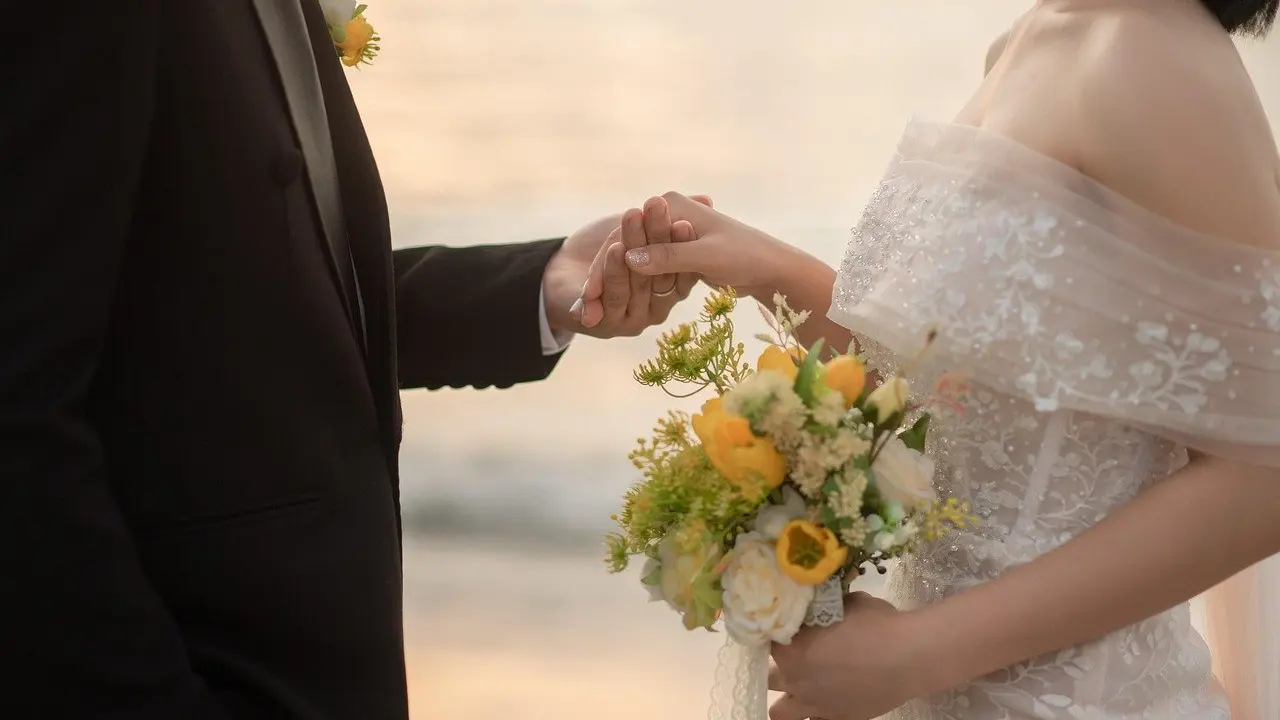
A couple planning an anniversary toast may wonder whether a vow renewal ceremony needs a license. It does not: a renewal has no legal effect, so the couple choose the wording, the guests and the setting freely.
The question of can you get married on a cruise ship belongs to the wider celebrations hub, and a renewal is the lighter-touch relative of that choice. This guide covers what the ceremony is, when couples hold one, how it runs and what rituals fit.
What a vow renewal ceremony is
A vow renewal ceremony is a nonlegal ritual in which a married couple speak their promises to each other again. According to a vow renewal planning guide from Paperlust, a renewal has no legal effect on marriage status, and that is precisely the point. There is no license and there are no legal witnesses, so the ceremony exists for meaning rather than for the record.
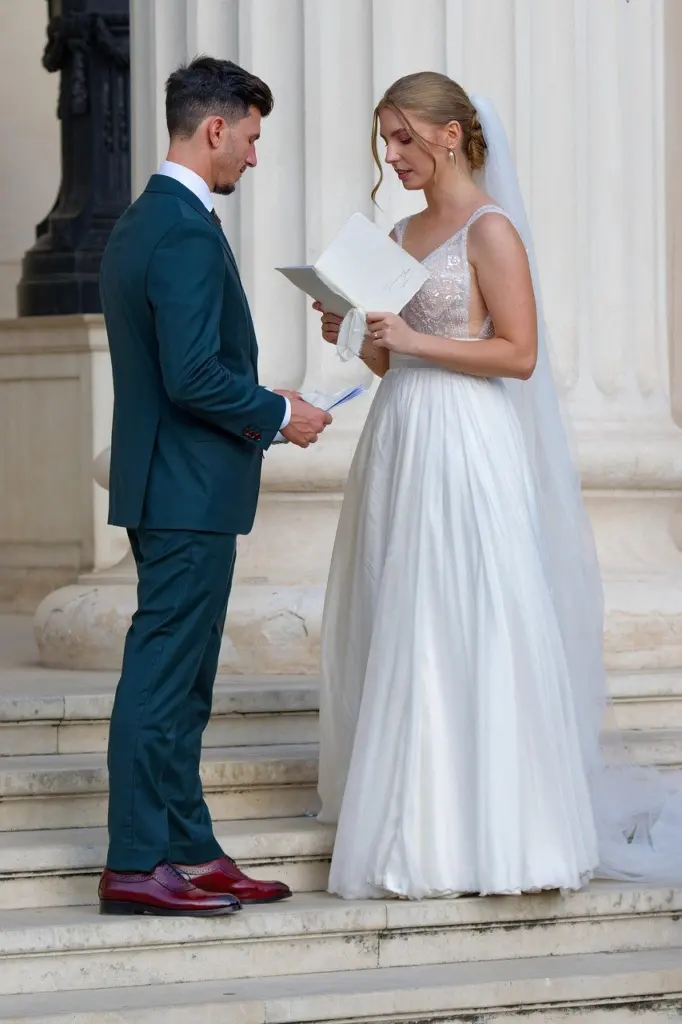
The core can be very short. A church renewal script has the officiant address a couple who have asked to renew their marriage vows on the occasion of their wedding anniversary. Music, readings, guests and setting are all choices you add around that moment, not requirements. That freedom is why a renewal can feel more personal than a wedding, and also why it can drift without a plan.
Several assumptions carry over from weddings and create stress that a renewal does not need. The table sorts out the common ones.
| Common assumption | What applies | Planning use |
|---|---|---|
| It needs a license and legal witnesses | No license, legal witnesses or legal effect | Skip the paperwork and spend the preparation time on the words and the people. |
| An officiant must lead it | An officiant is optional; anyone you trust can lead | Choose a leader for their warmth and ease with an audience, not for a title. |
| The original bridal party must return | The original bridal party does not have to take part | Invite the people who matter to the marriage now, not a rebuilt cast. |
| It should run like a full wedding | Most renewals run 15 to 30 minutes | Plan a short, focused service and put the effort into what is said. |
The figures above come from Paperlust’s vow renewal ceremony guide, which is a planning resource rather than an official body.
When couples renew their vows
The milestone anniversary is the usual trigger, and the most common milestones are the round-number anniversaries: the 10th, 25th and 50th, according to Paperlust. A round number gives guests an obvious reason to gather and gives the couple a date that needs no explanation. It is a common choice, not a rule, and nothing in the ceremony itself depends on the number of years.
The calendar is not the only reason. A celebrant’s list of reasons to renew notes that renewals are often held for couples who have experienced some difficult or tragic times during their marriage. The two reasons suit different couples:
- Milestone anniversary: suits couples who want a festive occasion with family and friends, since the date is fixed and widely understood.
- After a hard season: suits couples for whom the ceremony marks having come through something together. Here, readiness matters more than the date, so it is reasonable to wait until both partners feel ready to speak.
Whichever applies, the timing decision shapes the tone. A festive anniversary leans toward music and a gathering, while a renewal after difficulty often benefits from fewer guests and quieter words. Once the reason is clear, the running order follows.
Ceremony structure and running order
The traditional order is simple. In the church script, the officiant first addresses the couple and states why they are gathered. The couple then join hands and repeat their promises in turn, exchange rings and receive a blessing. Each step has one job: the opening sets the purpose, the promises carry the meaning, the exchange makes it tangible and the blessing closes it.
A looser outline is just as workable. A photographer’s non-traditional outline runs through grounding, reflection, vows, an exchange and a kiss. The vocabulary differs, but the shape is the same as the church order: a calm opening, the promises, a symbolic exchange and a close. That consistency is useful, because it means you can start from either template and still end up with a ceremony that feels complete.
Timing is where couples most often miscalculate. Paperlust puts the full service at 15 to 30 minutes, and the vow portion at about 3 to 6 minutes. Vows written to be spoken in that window keep the whole ceremony inside its usual length, so aim for a few heartfelt paragraphs rather than a long speech from each partner.
A leader can hold this structure together, but is not essential. The photographer’s observation is that most adventure renewals have couples read their vows privately without an officiant at all. For a ceremony with guests, a leader helps by cueing each step so that the couple are free to focus on each other.
Rituals and unity ritual options
A unity ritual in a renewal is any shared act that shows two people acting as one, and the church script already contains the plainest one: the couple join hands and repeat their promises in turn. Because the gesture is physical and mutual, it works for nearly every couple and needs no props, rehearsal or special venue. If you want only one ritual, make it this.
The exchange is the second natural ritual. In the church order it is a ring exchange followed by a blessing. The photographer’s outline widens the idea: the exchange can be rings, upgraded bands or a meaningful gift such as an engraved compass. That wider option is useful for couples whose original rings still fit their lives and who would rather give something new than repeat the old gesture.
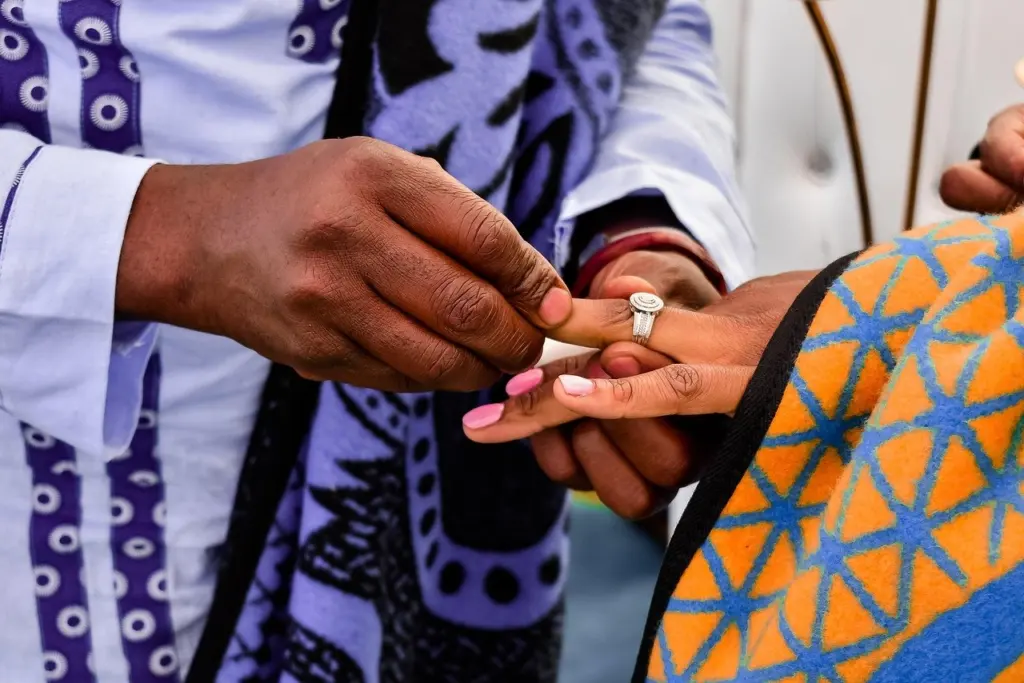
Choose rituals by what the couple will be comfortable doing in front of the guests. A small number of well-chosen gestures reads as deliberate. A long list of them can push the ceremony past its usual length and dilute the vows, which are the part guests came to hear.
Vow renewal at sea
A ship deck is another setting for the same structure: opening words, promises, an exchange and a blessing. What changes is logistics rather than ceremony. An event planning guide points out that a destination ceremony naturally limits the guest list to those willing and able to travel. For a sailing, that makes the guest decision the first one to settle, because it determines how many people the plan has to serve.
A cruise renewal suits couples who value a small, travelling circle over a large local party. It suits them less if an elderly relative or a friend with limited mobility would be left out. In that case, a home or local ceremony before or after the trip can include them, with the sea ceremony kept for those who sail.
Before booking, ask the cruise line’s wedding or celebrations department which ceremony formats it offers aboard and whether a renewal, as opposed to a legal wedding, is supported. The guide Cruise Wedding Packages: How To Plan An Unforgettable At‑Sea Ceremony In 2026 – Electracruises walks through planning an at-sea ceremony, and much of that groundwork applies when you are renewing rather than marrying.
Next step: turning the plan into a date
With the reason, the running order and one or two rituals chosen, the practical work is fixing a date, a setting and a guest list. How To Plan A Vow Renewal: A Simple, Stress‑Free Guide To Celebrate Your Next Anniversary – Electracruises covers that planning in sequence, from the first decisions to the day itself.
Frequently asked questions
| Question | Answer |
|---|---|
| Can children take part in a vow renewal? | Yes. According to Paperlust, children often participate in renewals, so they can be included in readings, in the exchange or simply in the front row. |
| How many guests make a renewal feel intimate? | Under 20 guests, limited to immediate family and closest friends, is described as very intimate by Paperlust. Choose a larger list only if you want a party rather than a private moment. |
| Can we read our vows without an officiant? | Yes. A photographer notes that, for most adventure renewals, couples read their vows privately without an officiant at all. This suits couples who want the words to stay between them. |